
Retail Millwork & Custom Store Fixtures - A.F. Johnson
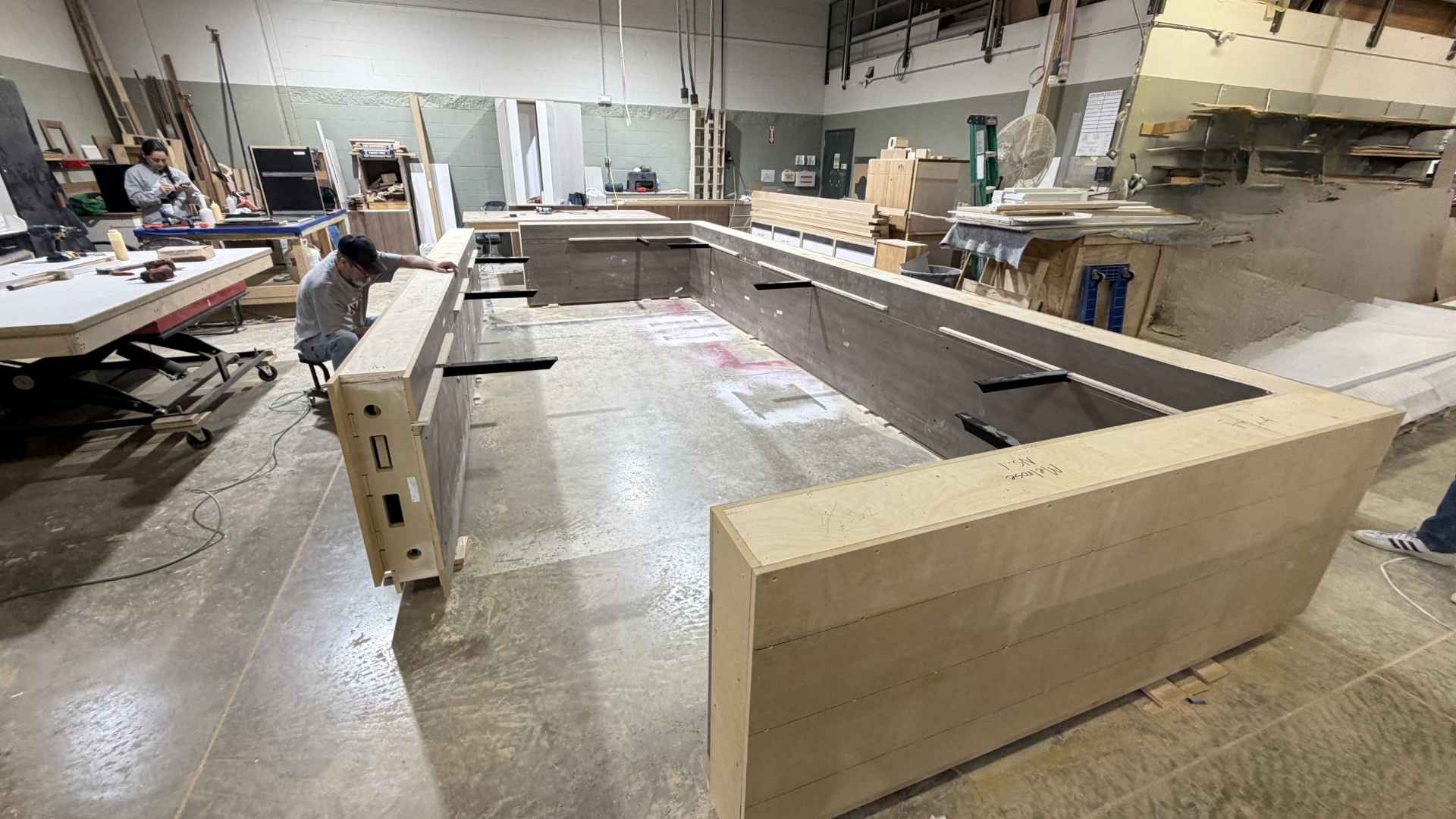
Custom fixtures can support retail sales by making products easier to see, guiding shoppers through the store, strengthening brand identity, and improving the overall experience. Effective retail millwork does more than fill space. It connects layout, lighting, materials, and merchandising to the way customers move, browse, compare products, and decide whether a store feels worth their time.
A well-designed environment cannot replace good products, fair pricing, or strong service. It can, however, reduce friction. Research published in Computers & Industrial Engineering found that department placement can change shopper paths and product visibility, both of which affect how customers experience a store.
What is custom millwork in a retail environment?
Custom millwork includes made-to-order displays, counters, shelving, wall systems, product cases, welcome desks, and service stations created for a specific store.
Unlike standard fixtures, custom pieces can be built around the merchandise, floor plan, customer traffic, brand standards, lighting, and daily operating needs.
AF Johnson Millwork treats these elements as part of the full customer experience. The goal is not simply to create an attractive fixture. It is to help the store function better, present products clearly, and stay true to the designer’s intent.
How does custom millwork make products easier to notice?
Custom millwork improves visibility by controlling display height, spacing, lighting, contrast, and sightlines. A fixture can elevate a featured item, separate a new collection, or create a visual pause that encourages customers to stop.
In The Maker’s Intent, AF Johnson Millwork President Kyle Greenfield says millwork can “help showcase whatever they’re selling.” He also explains that lighting and strategic placement can direct attention toward specific products.
A study in the European Journal of Operational Research found that rack orientation can affect product exposure under certain viewing conditions. The broader lesson is simple: fixture placement changes what customers see and how long it remains in view.
How can fixtures guide customers through a store?
Fixtures guide movement through their size, shape, angle, and placement. Large pieces can define pathways. Lower displays can preserve sightlines. Welcome desks can establish a starting point. Feature walls can draw customers deeper into the space.
Greenfield explains that larger fixtures can encourage people to move in a chosen direction. He also notes that desks or welcome areas placed at unusual angles can become conversation pieces and create a bold first impression.
The strongest layouts feel natural. Customers should understand where to go without feeling forced. Custom fixtures help create that sense of direction while supporting the store’s products, traffic patterns, and service areas.
Why does customer flow matter for retail sales?
Customer flow affects which products shoppers encounter, how easily they navigate, and whether the store feels comfortable or confusing.
A poor layout can create bottlenecks, hide departments, interrupt sightlines, and make checkout difficult to find. A stronger layout creates a clear sequence from entry to product discovery to purchase.
Research using shopper-path models found that department placement changes which areas become visible as customers move through a store. Separate customer-tracking research also found that observing real shopper movement can reveal layout and service-placement problems.
Every fixture should therefore be evaluated as part of the larger customer journey.
How does custom millwork strengthen brand identity?
Custom millwork turns brand identity into a physical experience. Colors, materials, finishes, shapes, and repeated details can make a store recognizable before a customer sees the logo.
Greenfield explains that retailers often want customers to have a similar experience across locations, whether they visit on the East Coast or West Coast. That consistency affects what AF Johnson Millwork builds and how customers are expected to use the space.
A familiar service counter, display style, color palette, or layout can make a store easier to recognize and navigate. Consistency also helps multi-location brands create a dependable experience without making every space feel identical.
How can the store environment affect customer comfort?
The store environment can make customers feel relaxed, curious, rushed, or overwhelmed. Millwork contributes through organization, spacing, scale, finish quality, and coordination with lighting and signage.
Greenfield compares a positive branded environment to returning to see a friend. When customers feel comfortable in one location, that familiarity can carry into another store under the same brand.
A study comparing two furniture stores found that customer mood and satisfaction were stronger in the more pleasant environment. Another study found that layout, signage, and the broader servicescape can shape shoppers’ emotional responses.
Millwork does not guarantee a sale, but it helps create an environment where customers feel more comfortable browsing.
How do materials and finishes influence perceived value?
Materials and finishes tell customers what kind of experience to expect. High-gloss surfaces, glass, metal, rich wood tones, and refined lighting can communicate luxury. Matte finishes, textured laminates, or reclaimed wood may suggest warmth, durability, craft, or environmental responsibility.
Greenfield uses high-end jewelry stores as an example. Polished finishes and carefully lit displays help customers understand that they are entering a premium environment. He makes a similar point about cosmetics stores, where the space often feels more elevated than a standard department aisle.
Appearance still has to match performance. Materials must withstand cleaning, moisture, impact, and daily wear. The best option is the one that supports the brand, fits the budget, and performs well over time.
How can lighting improve product presentation?
Lighting and millwork work together by directing attention and helping customers see products clearly. Shelf lighting, backlit panels, display-case lighting, and accent lighting can give featured merchandise more visual emphasis.
The fixture affects how that light performs. Reflective finishes may create glare. Dark surfaces may require more illumination. Deep shelves can cast shadows. Glass can improve visibility but requires careful positioning.
Lighting should be considered early in the design process. The retailer, designer, lighting specialist, and millwork manufacturer should coordinate dimensions, wiring, access points, and maintenance before fabrication begins.
The goal is not to light every item equally. It is to create a visual hierarchy that shows customers what to notice first.
Can custom fixtures help a retailer stand apart?
Custom fixtures can create a store experience that competitors cannot easily copy. Distinctive colors, shapes, finishes, and materials can become recognizable parts of the brand.
Greenfield explains that major retailers use color and laminate choices so consistently that someone may identify the store from a fixture photograph alone. The pieces look like that brand rather than a generic display.
Distinctive design must still work in practice. An unusual counter should remain accessible. A dramatic display should be easy to restock. AF Johnson Millwork helps connect creative ideas with fabrication, installation, durability, and daily use.
How does custom millwork support rebranding and growth?
Custom millwork helps retailers turn a new identity into physical elements that can be repeated across existing and future locations.
Greenfield notes that brands regularly update their stores and identities to give customers a reason to return.
For multi-location growth, repeatability matters. Prototype fixtures, approved samples, detailed drawings, standardized hardware, and clear finish specifications help maintain consistency.
Retailers also do not need to replace everything at once. A phased update may begin with checkout counters, welcome desks, feature walls, or focal displays. Strong documentation makes later rollouts easier and reduces variation between locations.
Can sustainable millwork communicate brand values?
Sustainable millwork can communicate brand values when the materials and claims are specific and verifiable. Reclaimed wood, recycled-content panels, responsibly sourced products, durable construction, and repairable components can all support a clear environmental message.
Greenfield shares an example of a project using reclaimed wood for flooring, millwork, and large doors. He estimates that the wood may be around 100 years old and hopes it can remain in use for another century.
Durability also matters. A fixture that can be repaired, refinished, or adapted may prevent the waste created by frequent replacement.
Retailers should document material sources, certifications, and performance claims. Clear facts are more credible than vague sustainability language.
How can retailers measure the impact of custom millwork?
Retailers can measure impact by defining the fixture’s purpose before installation and tracking relevant results afterward.
Useful measures include:
Sales by display area
Product interaction
Dwell time
Foot traffic
Conversion rate
Average transaction value
Customer feedback
Checkout wait times
Staff efficiency
Greenfield recommends starting with the goal. Is the retailer trying to showcase a product, guide customers, or create a different experience? The answer should shape the design.
Retailers should also account for pricing, promotions, staffing, inventory, and seasonality. Fixtures contribute to performance, but they are only one part of the retail system.
What should retailers discuss with a millwork partner?
Retailers should discuss business goals, customer flow, product needs, brand standards, budget, durability, installation, and plans for future locations.
Key questions include:
Which products need the most visibility?
Where should customers pause?
How should shoppers move through the space?
How will staff restock displays?
Will lighting or technology be integrated?
Which brand details are nonnegotiable?
Can the design be repeated across locations?
How will damaged parts be repaired?
AF Johnson Millwork’s collaborative role is especially valuable when a concept must move from a drawing into a reliable physical product. Fabrication experience can prevent problems while protecting the design intent.
When is custom millwork worth the investment?
Custom millwork is most valuable when standard fixtures cannot support the retailer’s products, floor plan, brand standards, or customer experience goals.
It can be especially useful for flagship stores, luxury environments, branded rollouts, unusual layouts, high-value merchandise, service areas, product launches, and rebranding projects.
Retailers should evaluate value across the full lifespan of the fixture. Initial cost matters, but so do durability, maintenance, product capacity, adaptability, and the ability to repeat the design across locations.
A custom solution earns its value when it solves a real problem that an off-the-shelf fixture cannot address effectively.
What is the connection between custom millwork and retail performance?
Custom fixtures connect the physical store to product visibility, customer movement, brand recognition, perceived value, and comfort. The strongest projects begin with a clear goal, translate that goal into practical design decisions, and measure whether the completed space performs as intended.
AF Johnson Millwork brings fabrication knowledge and collaborative problem-solving to that process. By aligning retail millwork with customer behavior and brand strategy, retailers can create spaces that are easier to navigate, more memorable, and better suited to the products being sold.
Watch the Full Episode of The Maker’s Intent
Watch the full episode of The Maker’s Intent on YouTube to hear host Mike Downer and Kyle Greenfield, president of AF Johnson Millwork, discuss how fixtures, lighting, customer flow, materials, and branded environments shape the in-store experience. Their conversation offers practical insight into how thoughtful fabrication can help retailers present products clearly, guide customers, and create a consistent experience across locations.
Frequently Asked Questions
What does custom store millwork include?
It includes made-to-order displays, counters, shelving, cases, wall systems, welcome desks, checkout stations, and service areas designed for a specific store or brand.
Can custom fixtures increase retail sales?
They can support sales by improving product visibility, customer flow, organization, and brand presentation. Results also depend on pricing, merchandise, service, inventory, and promotions.
How do store fixtures affect customer behavior?
Fixtures influence what shoppers see, where they walk, where they pause, and how easily they compare products.
Which materials are used for custom fixtures?
Common materials include hardwood, plywood, engineered panels, laminates, solid surfaces, glass, metal, acrylic, and reclaimed wood.
Can custom fixtures be repeated across locations?
Yes. Prototypes, approved samples, drawings, hardware standards, and material specifications help maintain consistency across stores.
How does lighting improve a display?
Lighting highlights product details, creates contrast, reduces dark areas, and directs attention toward priority merchandise.
Is sustainable custom millwork available?
Yes. Options may include reclaimed wood, recycled-content materials, certified wood products, durable components, and fixtures designed for repair or reuse.
How can a retailer evaluate a new fixture?
Retailers can track sales by area, product interaction, foot traffic, dwell time, conversion rate, customer feedback, and staff efficiency.