
Custom Commercial Millwork vs. Off-the-Shelf Cabinetry - AF Johnson
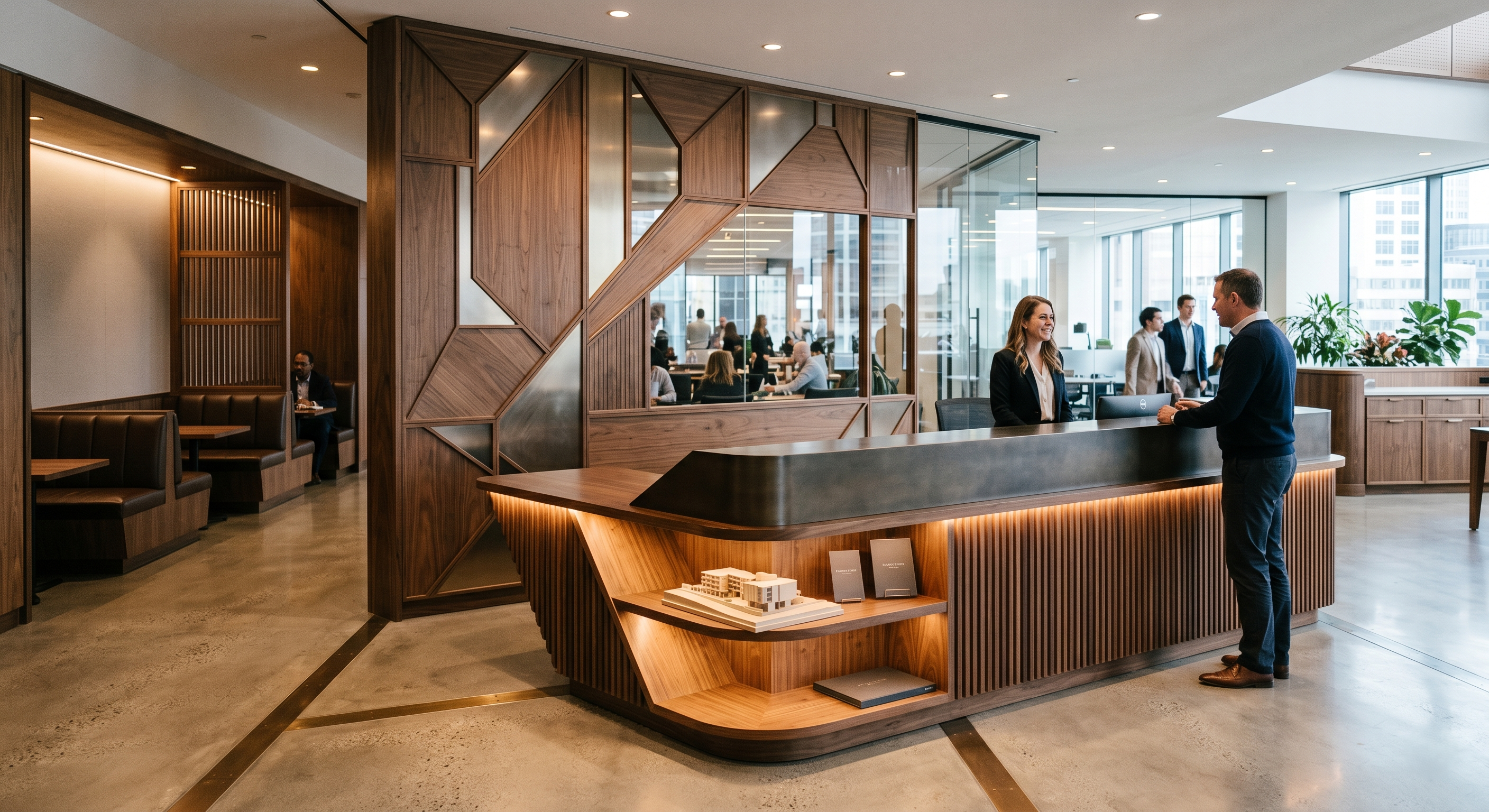
Most commercial spaces look the same for a reason: they rely on standardized solutions that weren’t designed for how people actually use them. The conversation around custom commercial millwork vs. off-the-shelf cabinetry often misses the bigger picture—this isn’t just about furniture. It’s about how a space functions, feels, and represents a brand. When done right, millwork becomes a strategic asset that shapes experience, improves performance, and brings ideas to life.
What Is Commercial Millwork?
Commercial millwork goes far beyond cabinets. It refers to custom-built architectural elements designed specifically for a space, its users, and its purpose. That includes reception desks, wall systems, seating, display units, trims, and fully integrated design features that connect everything together.
At its core, millwork is about building something that doesn’t exist yet. It isn’t pulled from a catalog or selected from a template. It starts with raw materials and a clear intention.
Kyle Greenfield, president of AF Johnson Millwork Co., explains it simply: “Commercial millwork does include cabinetry, but not just that… it covers a lot more than just cabinetry.” That broader definition is important because it shifts how businesses think about their spaces. Instead of buying pieces, they begin designing environments.
And that shift is where the real value begins.
Why Standard Solutions Fall Short
Off-the-shelf solutions are built for convenience. They are designed to fit as many situations as possible. But that generalization is exactly what limits them.
The Hidden Cost of “Good Enough” Design
In commercial environments, there is no such thing as “average.” Every space has unique constraints, workflows, and goals. Healthcare facilities require stations that support multiple users at once. Offices need to balance collaboration with privacy. Retail spaces must guide attention and movement.
Trying to force a standardized product into those environments creates friction. Things feel slightly off. Workflows become inefficient. And over time, those small inefficiencies add up.
What often gets overlooked is the long-term impact. Small inefficiencies compound into wasted time, reduced productivity, and even frustration among employees and customers. A space that doesn’t quite work becomes something people have to work around every day.
Kyle puts it into perspective when talking about large-scale applications: “Sometimes it’s just the size and scale… there’s no standard product for that.” That reality applies across industries, not just healthcare.
The takeaway is straightforward: when you design around products, you compromise. When you design for the space, everything aligns—and that alignment is where real efficiency and value are created.
The Strategic Value of Custom Millwork
Custom millwork is often viewed as an aesthetic upgrade. In reality, it is a strategic investment that impacts how a business operates day to day.
Branding Through Space
Your physical space is one of the most immediate ways people experience your brand. Before a conversation even starts, your environment is already communicating something.
A thoughtfully designed reception area, for example, can signal professionalism, creativity, or innovation. It sets expectations instantly.
Kyle shared an example of a client who wanted to showcase their products in a lobby. Instead of a simple desk, the team created a display wall with integrated lighting and shelving. The result wasn’t just functional—it told a story.
That’s the difference between filling a space and using it intentionally.
Function Drives Everything
Design is not just about appearance. It is about performance.
Custom millwork allows every element to be tailored to how people actually use the space. That includes dimensions, materials, and even how different components interact with each other.
For example, in healthcare settings, nurse stations often need to accommodate multiple staff members while maintaining visibility and access to critical tools. That level of complexity cannot be addressed with pre-made products.
As Kyle explains, “We design everything around how the product will be used… the size, shape, and number of users.” That mindset is what separates functional design from decorative design.
Employee Experience Matters
A well-designed space doesn’t just look better—it feels better to work in.
Employees spend a significant portion of their day interacting with their environment. When that environment supports their tasks, reduces friction, and feels intentional, it improves morale.
Over time, that leads to better productivity, stronger engagement, and even improved retention.
Kyle highlights this impact clearly: “A well-designed space can make work more enjoyable and efficient, and even safer.” That combination of benefits is difficult to achieve without customization.
Industries That Rely on Commercial Millwork
Custom millwork is not limited to one sector. It plays a role in nearly every industry where space influences experience.
Hospitality
In hospitality, atmosphere is everything. Guests form impressions quickly, and design plays a major role in shaping those impressions. Custom millwork allows hotels and restaurants to create environments that feel unique and memorable.
Corporate Offices
Workspaces have evolved significantly in recent years. Companies are rethinking how offices support collaboration, focus, and culture. Custom millwork helps create flexible environments that reflect those priorities.
Healthcare
Healthcare environments require precision and durability. From nurse stations to reception areas, every element must support both staff and patient needs. Custom solutions ensure that nothing is left to chance.
Retail
Retail spaces are designed to influence behavior. Layout, visibility, and presentation all impact purchasing decisions. Custom millwork allows brands to guide the customer journey more effectively.
Across all of these industries, the common theme is customization. No two spaces are identical, and their solutions shouldn’t be either.
Materials Are No Longer Limited to Wood
Despite the name, modern millwork is not limited to wood.
Today’s projects often combine multiple materials to achieve both function and visual impact. Metal introduces strength and contrast. Glass adds openness. Upholstery enhances comfort. Integrated lighting brings everything to life.
This combination of materials allows for more dynamic and adaptable designs. It also expands what is possible from both a functional and aesthetic standpoint.
Kyle notes that lighting, in particular, plays a key role: it can highlight branding, create ambiance, and shape how a space feels the moment someone enters. That emotional response is a critical part of design.
The Process: From Idea to Installation
Custom millwork is a collaborative journey, not a one-time purchase.
Concept and Vision
Every project starts with an idea. Sometimes that idea is detailed. Other times, it is simply a goal or a challenge that needs to be solved.
Design and Collaboration
This is where expertise becomes essential. Teams work closely with clients to translate ideas into practical designs. Adjustments are made along the way to ensure both function and aesthetics are aligned.
Kyle describes some of the most rewarding projects this way: “Some of the most fun projects come from people saying, ‘I have an idea, but I don’t know how to make it happen.’” That collaboration is what turns concepts into reality.
Material Selection and Engineering
Choosing the right materials is a critical step. Each decision affects durability, cost, and long-term performance.
Fabrication
This is where everything comes together. Skilled teams build each component with precision, combining craftsmanship with modern tools.
Installation
The final step is installation. Proper execution ensures that the finished product performs exactly as intended.
Every stage of this process requires coordination and expertise. When done correctly, the result feels seamless—even though it is anything but simple behind the scenes.
Real-World Impact: More Than Just Aesthetics
The true value of commercial millwork becomes clear when you look at real-world applications.
One project focused on improving safety in a medical facility. The solution involved custom-built structures that combined wood, glass, and protective materials. The design addressed safety concerns while maintaining usability.
Another project transformed how a company interacted with its customers. Instead of walking clients through a busy manufacturing floor, the team created a dedicated display environment. This improved safety, enhanced the customer experience, and reinforced the company’s brand.
These examples highlight an important point: millwork is not just about design. It is about solving problems in a way that improves outcomes.
Why Quality Standards Matter
Not all millwork is created equal, and quality can vary significantly.
Organizations like the Architectural Woodwork Institute (AWI) set standards that ensure consistency and durability. These standards provide a framework for quality, giving clients confidence in what they are investing in.
Kyle emphasizes the importance of this: AWI certification helps ensure that what is built will last and perform as expected. That level of assurance is especially important in commercial environments where reliability matters.
The Future of Commercial Millwork
The demand for customization continues to grow.
Businesses are placing more value on experience. Employees expect environments that support their work. Customers respond to spaces that feel intentional and well-designed.
Technology is also changing the landscape. Advanced design tools make it easier to visualize concepts before they are built. Sustainable materials are becoming more common. Integrated systems, such as lighting and smart features, are becoming standard.
At the same time, the role of expertise remains unchanged. Tools can enhance the process, but they cannot replace the insight that comes from experience.
The future of millwork will likely involve even greater collaboration, more advanced materials, and a continued focus on creating spaces that truly work.
Why the Right Millwork Strategy Changes Everything
At its best, commercial millwork is about solving problems and creating experiences. It aligns form with function and turns ideas into something tangible. The discussion around custom commercial millwork vs. off-the-shelf cabinetry isn’t really about products—it’s about outcomes. Businesses that understand this approach are the ones creating spaces that stand out and perform.
Watch the Full Podcast Episode
If you want to go deeper and hear how these ideas play out in real-world projects, watch the full episode of The Maker’s Intent on YouTube. You’ll get firsthand insights from Kyle Greenfield of AF Johnson Millwork Co. he discusses the thinking, collaboration, and craftsmanship behind custom millwork—and how those ideas translate into real results.
FAQs About Commercial Millwork
What is the difference between millwork and casework?
Millwork is custom-built for a specific space, while casework typically refers to modular or pre-manufactured units. Millwork offers more flexibility and integration.
Is commercial millwork more expensive?
It can have a higher upfront cost, but it often provides better long-term value through durability and improved functionality.
How long does a custom millwork project take?
Timelines vary based on complexity, but most projects take several weeks to months from design to installation.
Can millwork include materials other than wood?
Yes. Modern millwork often incorporates metal, glass, upholstery, and lighting.
What industries benefit the most from millwork?
Healthcare, hospitality, retail, and corporate offices all benefit due to their need for tailored environments.
How do I choose the right millwork partner?
Look for experience, proven work, and adherence to recognized quality standards.
Does millwork improve employee productivity?
Yes. Better-designed spaces reduce inefficiencies and create a more comfortable work environment.
Is custom millwork worth it for small businesses?
Yes. Even smaller spaces benefit from thoughtful design that maximizes functionality and brand presence.