
Commercial Millwork Heritage & Modern Fabrication - A.F. Johnson Millwork
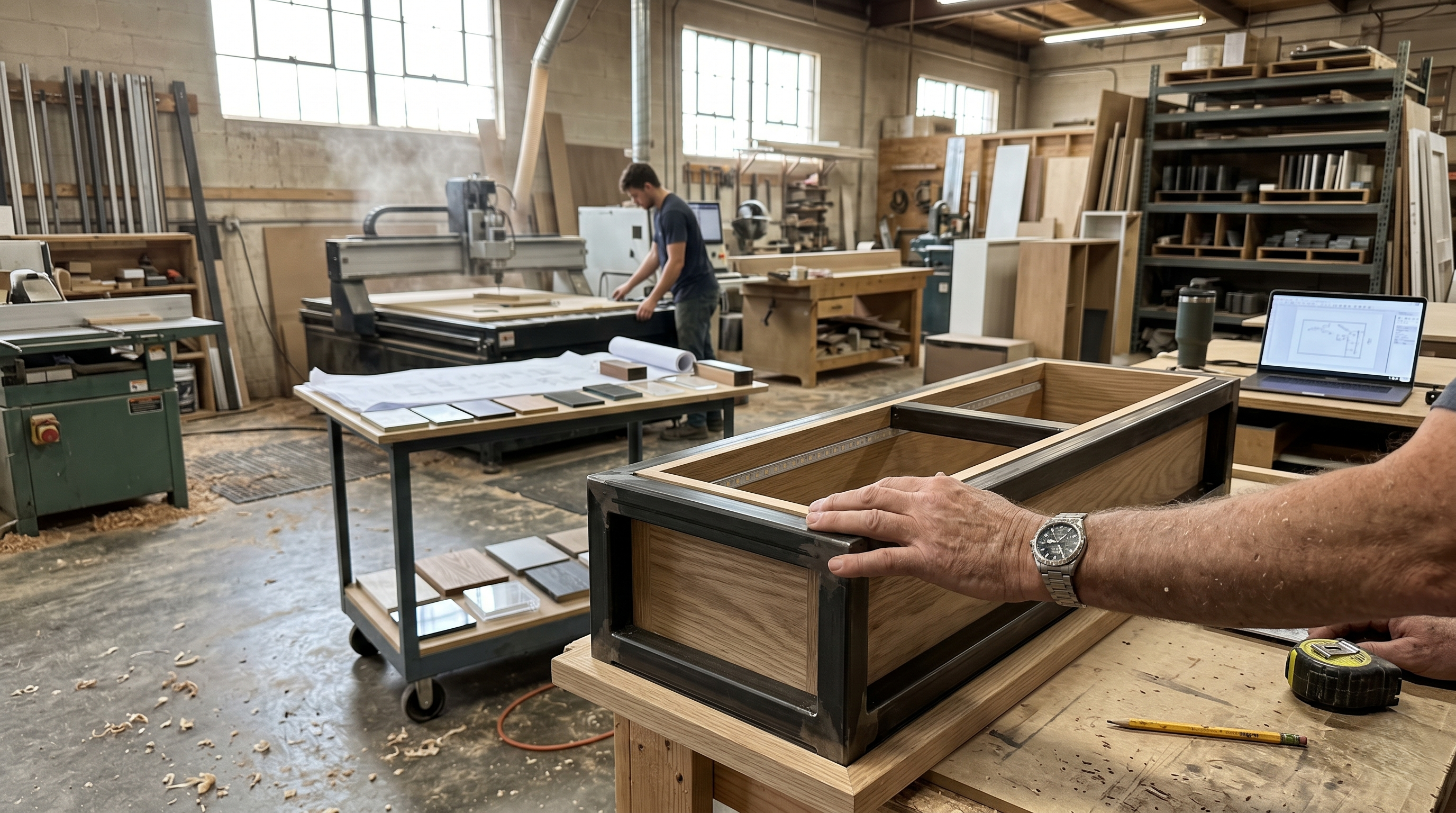
In a world obsessed with speed and innovation, there’s a quiet advantage held by companies that have simply been doing the work—day in and day out—for decades. The intersection of commercial millwork heritage and modern fabrication reveals something powerful: experience isn’t outdated, it’s a competitive edge. When projects become more complex and design intent pushes boundaries, it’s not just new technology that solves problems—it’s the depth of knowledge behind it.
Why Experience Still Wins in Complex Fabrication
Modern construction and fabrication projects are evolving fast. Architects are designing more ambitious spaces, materials are becoming more diverse, and clients expect both speed and perfection. That combination creates pressure—and it exposes the difference between companies that know the work and those still learning it.
The Rising Complexity of Modern Projects
Today’s builds are rarely straightforward. A single project might require coordination between designers, engineers, fabricators, and contractors—all working toward a shared vision. Timelines are tighter, tolerances are smaller, and expectations are higher.
This complexity creates friction. Small misalignments early in a project can compound into costly delays later. That’s why experience becomes critical. Teams that understand how projects unfold in the real world can spot risks early and course-correct before problems escalate.
Experience as Operational Infrastructure
Experience, in this environment, becomes a form of infrastructure. It supports decision-making, reduces risk, and speeds up execution. Teams that have seen hundreds—or thousands—of projects don’t just react. They anticipate.
They know which details matter most. They understand where issues are likely to occur. And they can guide clients through decisions that balance design intent with practical execution.
This is where experienced firms separate themselves. They don’t just build—they advise.
Applying Historical Insight to Modern Problems
That’s exactly what Kyle Greenfield, president of A.F. Johnson Millwork Co., pointed to when he explained, “When somebody has a concept or an idea, it’s hard to find people who may have worked on something like it… we have such extensive knowledge… it’s pretty easy to go back and find something similar.”
That ability to reference past work isn’t just convenient. It’s strategic. It allows teams to move faster without sacrificing quality. Instead of guessing, they’re applying proven solutions that have already worked in similar conditions.
Over time, this creates a compounding advantage. Each project adds to the knowledge base, making future work more efficient and more precise.
Why Confidence Matters in High-Stakes Work
In fabrication, confidence isn’t about ego—it’s about reliability. Clients need to know that their partner can deliver, even when challenges arise.
And in a field where a single mistake can delay timelines or increase costs, that kind of confidence matters. It reassures stakeholders, streamlines communication, and ultimately leads to better outcomes.
Experience doesn’t eliminate challenges—but it ensures they’re handled with clarity and control.
From Craft to Capability: The Evolution of Millwork
The Foundation of Craftsmanship
Before millwork became complex, it was precise. The early days of the industry were rooted in craftsmanship—cutting, shaping, and assembling materials with care and consistency.
A.F. Johnson Millwork Co’s story begins there. Founded by Adolph Johnson, an immigrant who arrived with tools and skill rather than resources, the company grew from a simple understanding: if you can build well, people will find you.
That principle still holds today. Craftsmanship is not a trend. It’s the baseline.
Without it, modern fabrication becomes unstable. Materials fail, finishes degrade, and designs lose integrity. But when craftsmanship is strong, it creates a platform for growth.
Expanding Into Modern Complexity
Today’s commercial millwork is no longer limited to wood. It has evolved into a multidisciplinary field that blends materials, technologies, and design thinking.
Projects now regularly involve:
Integrated lighting systems
Metal fabrication and detailing
Glass and acrylic components
Upholstery and soft materials
Sustainable and engineered products
This transformation has elevated the role of millwork. It’s no longer just a finishing trade. It’s a critical part of the overall design and construction process.
Greenfield captured this shift when he said, “Now we’re incorporating things like lighting and new materials to create really unique custom pieces.” That shift requires more than tools. It requires adaptability, coordination, and a deep understanding of how different elements come together.
The result is a more dynamic, more creative, and more demanding industry.
The Hidden Advantage of Generational Knowledge
Institutional Memory as a Competitive Edge
Most companies build experience over time. Few retain it effectively. That’s where generational businesses stand apart.
At A.F. Johnson Millwork Co., five generations of continuity have created something rare: institutional memory that spans decades. This isn’t just about history—it’s about access to solutions that have already been tested in the real world.
Greenfield described this advantage clearly: “We can say, ‘We did something like that back in the ’70s or ’80s,’ and build on it.”
That mindset changes how problems are approached. Instead of starting from scratch, teams start from insight. They refine rather than reinvent.
Mentorship and Skill Transfer
Experience doesn’t just sit in archives. It lives in people.
Long-tenured employees play a critical role in maintaining quality and consistency. These are individuals who have spent decades mastering their craft. They’ve seen projects succeed and fail. They’ve learned lessons that can’t be found in manuals.
And more importantly, they pass that knowledge on.
This mentorship creates continuity. It ensures that even as teams evolve, the standard remains the same. New employees don’t just learn how to do the work—they learn how to think about it.
That’s what sustains excellence over time.
Relationships Drive Real Growth
Moving Beyond Price-Driven Work
For years, the construction industry has leaned heavily on competitive bidding. The lowest price often wins. But in complex fabrication, that model has limitations.
Quality, reliability, and communication are becoming more valuable than cost alone. Clients want partners who can deliver—not just proposals that look good on paper.
Greenfield emphasized this shift when he said, “We want to deliver such a great product that clients keep coming back.” That philosophy reframes success. It’s not about winning one project—it’s about earning the next one.
Trust That Travels
One of the clearest indicators of trust is when clients bring you along. As contractors grow and take on projects in new locations, they often rely on partners they already trust.
That’s how A.F. Johnson Millwork Co. expanded nationally. Not through aggressive marketing, but through consistent performance.
“Once we build good relationships, we follow them wherever their projects go,” Greenfield explained. “California, Florida, anywhere.”
That kind of growth is earned. It reflects a reputation built over time.
Scaling Without Losing Craftsmanship
Scaling a fabrication operation without sacrificing quality is one of the hardest challenges in the industry. Growth introduces more people, more projects, and more moving parts—but the expectation from clients never changes. The work still needs to feel intentional, precise, and consistent. Companies that succeed at scaling understand that craftsmanship isn’t just a skill at the bench; it’s a standard that has to be embedded into every process, decision, and handoff across the organization.
Consistency Across Every Project
There’s a common misconception that larger projects are inherently more complex. In reality, they often present the same types of challenges as smaller ones—just on a different scale.
Greenfield addressed this directly: “We’ve done projects well over a million dollars, but they come with the same types of challenges as smaller ones.”
The expectation doesn’t change. Every project must meet the same standard of quality.
Systems That Support Growth
To maintain that consistency, companies need more than skilled labor. They need systems that support execution.
These include:
Clear workflows and processes
Strong communication between teams
Detailed project management
Ongoing quality checks
When these systems are in place, craftsmanship becomes scalable. It doesn’t get diluted—it becomes repeatable.
The Role of Standards in Building Trust
In an industry where precision matters, standards provide clarity. Organizations like the Architectural Woodwork Institute (AWI) establish benchmarks that define quality.
Greenfield explained the importance of this by comparing it to other professional certifications. It’s a signal to clients and architects that a company meets a recognized level of performance.
That assurance reduces uncertainty. It builds confidence before a project even begins.
And for companies that prioritize excellence, it reinforces what they already deliver.
Adapting Without Losing Identity
The Balance Between Old and New
Technology continues to reshape fabrication. CNC machines, digital modeling, and advanced materials have changed how work gets done.
But tools don’t replace experience—they enhance it.
The most successful companies are those that combine both. They use modern tools to increase efficiency while relying on traditional knowledge to maintain quality.
That balance allows them to evolve without losing what made them successful.
Creativity as a Differentiator
Today’s clients aren’t just looking for execution—they’re looking for creativity. They want unique spaces that reflect their brand and vision.
That’s where experienced teams stand out.
Greenfield highlighted this when he said, “The more abstract the idea, the more we get to use our skills to create something unique.”
Instead of seeing complexity as a barrier, they see it as an opportunity.
That mindset transforms the role of a millwork company from builder to collaborator.
What Other Industries Can Learn
The lessons from commercial millwork extend far beyond construction.
Experience compounds. Relationships create stability. Quality builds reputation. And adaptability ensures longevity.
These principles apply to any industry where trust and performance matter.
Companies that focus only on short-term gains often struggle to sustain growth. But those that invest in craftsmanship and relationships build something more durable.
They build trust.
Watch the Full Podcast
If you want a deeper look into how decades of experience translate into real-world results, the full podcast episode of The Maker’s Intent offers insights you won’t find anywhere else. Hear directly from Kyle Greenfield of A.F. Johnson Millwork Co. as he shares real examples, challenges, and lessons from the field. Watch the full conversation on YouTube to see how commercial millwork heritage and modern fabrication come together in practice.
FAQs
What is commercial millwork?
Commercial millwork refers to custom-built woodwork and integrated material fabrication used in commercial environments such as offices, retail stores, and hospitality spaces.
Why does experience matter so much in fabrication?
Experience reduces risk. It allows teams to anticipate challenges, make better decisions, and deliver consistent results.
How has millwork changed over time?
It has evolved from simple cabinetry into a complex field that integrates multiple materials, technologies, and design elements.
What is AWI certification?
AWI certification indicates that a company meets established industry standards for quality and craftsmanship in architectural woodwork.
Why are relationships important in construction projects?
Strong relationships improve communication, reduce errors, and lead to repeat business and long-term success.
Are smaller projects easier than larger ones?
Not necessarily. Smaller projects often require the same level of precision and attention to detail as larger ones.
How do companies maintain quality as they grow?
They implement systems, invest in training, and maintain strict quality control processes.
What sets leading millwork companies apart?
A combination of experience, craftsmanship, adaptability, and strong client relationships.